
Metal Asset Tags
Anodized aluminum durability in a peel-and-stick form factor.
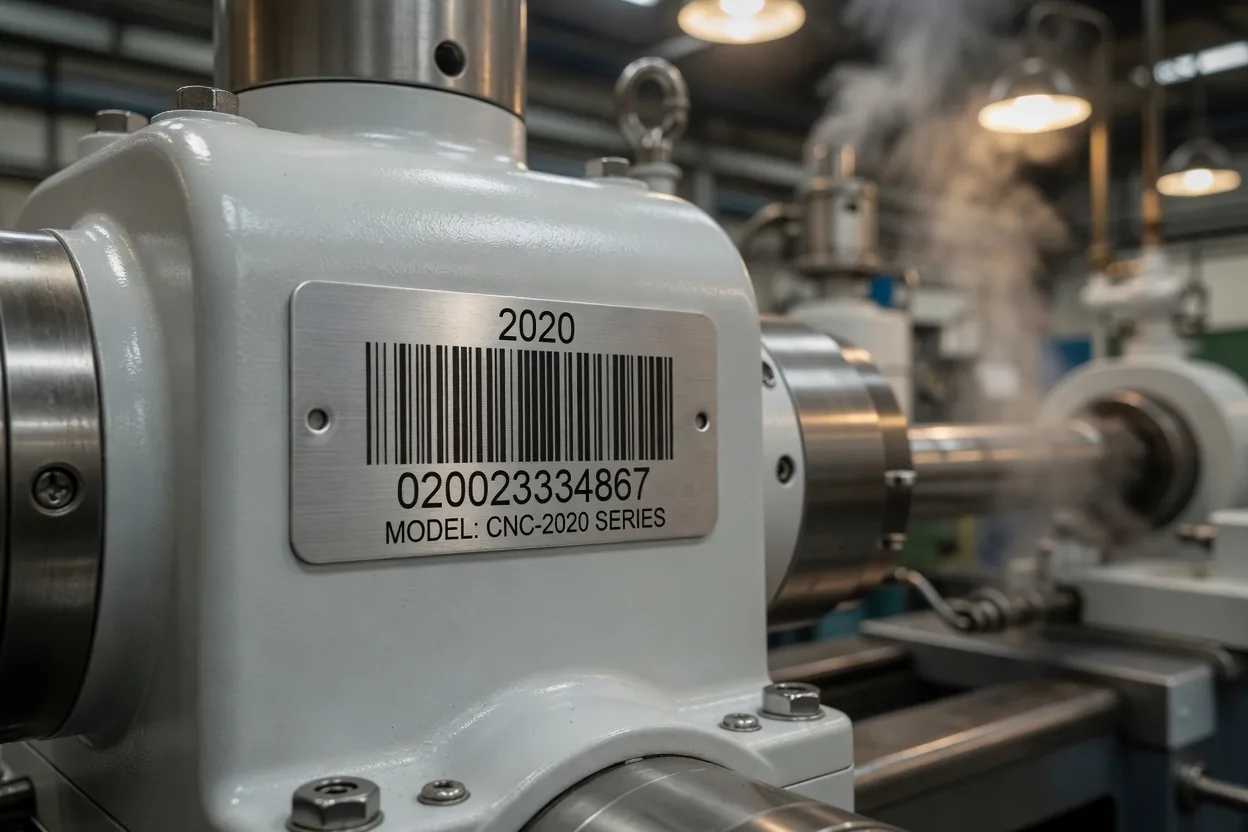
Traditional aluminum asset plates require rivets, screws, or epoxy bonding. Our metal-look asset tags deliver the same five-plus-year outdoor durability and serialized barcode legibility on a peel-and-stick form factor. Our thick overlaminate protects the artwork from UV and abrasion, while our permanent adhesive bonds to painted steel, powdercoat, and textured plastic. Use them where a metal plate would otherwise be specified with no risk of scratching and oxidizing like aluminum tags.
| Substrate | 12-mil plastic |
|---|---|
| Adhesive | Permanent acrylic, low-surface-energy rated |
| Print method | Subsurface full-color digital |
| Sizes | Any. 0.5x1, 0.75x1.5, 1x2, 1.5x3, custom |
| Outdoor rating | 5+ years |
Best for
- Replacing rivet-installed aluminum plates
- Marine and corrosive environments
- Where install time matters
Recommended tier
Strongest tier (12 mil PLASTIC) is the right specification for this format and most environments.
Pricing
This product is custom-priced to your size, material, and quantity. Get an exact price in about 30 seconds, or start your design and we'll quote it.
Real photographs of the construction, application, and finish.
What these metal asset tags are, exactly
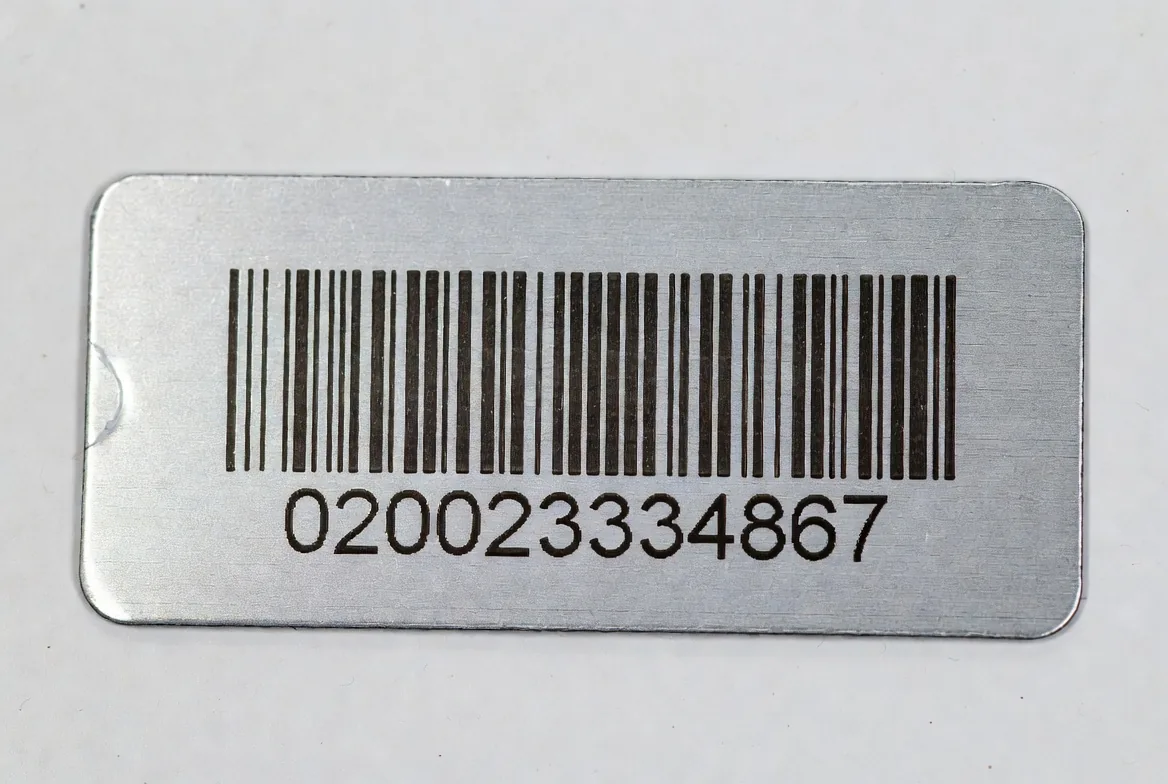
Our metal asset tags are metal-look tags, not solid metal. Each one is built from 12-mil plastic with subsurface metallic ink, printed in full color under an overlaminate, and backed with a permanent acrylic adhesive rated for low-surface-energy surfaces. You get the aluminum look people expect from a metal property tag in a peel-and-stick tag that goes on in seconds.
The construction sits alongside our Strongest tier: the same 12-mil plastic thickness, a permanent adhesive built for hard-to-bond surfaces, and a 5+ year outdoor rating.
The print is subsurface, meaning it sits between the plastic and the overlaminate instead of on top. Scraping, cleaning, and UV hit the overlaminate first, and the artwork underneath stays intact.
Looking for aluminum asset tags?
If you searched for aluminum asset tags, you probably want two things: the look of anodized aluminum and a tag that lasts. Our metal-look tags give you that look on 12-mil plastic with subsurface metallic ink. They are not solid aluminum, and that is deliberate.
Traditional aluminum asset plates are fastened with rivets, screws, or epoxy. That means drilling holes in the equipment you are trying to track. Our metal-look tags peel and stick, so install time drops from minutes to seconds.
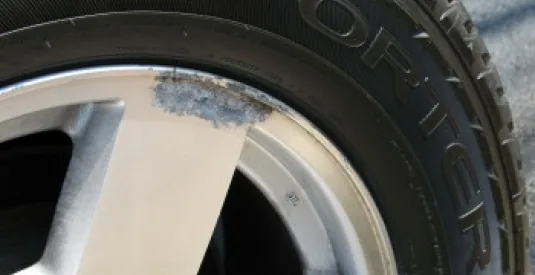
Aluminum also scratches. Once the surface is scratched and exposed to air it can oxidize, like the corroded aluminum wheel in our photos. A plastic tag under an overlaminate does not corrode in salt fog, it does not create a galvanic couple with a stainless or carbon-steel host, and it is rated 5+ years outdoors.
Not every metal-look tag is built this way. Our Hall of Shame includes aluminum-foil tags from an online vendor that tore into pieces when students peeled them off Chromebook lids. Thickness and construction make the difference.
Metal asset tags for equipment
The permanent adhesive bonds to painted steel, powdercoat, textured plastic, and rough cast metal, which covers most of what a maintenance or fleet team needs to tag. Powdercoat is the surface that defeats ordinary labels, because it is a low-surface-energy finish that repels standard adhesives.
Because the bond is chemical rather than mechanical, the tag also conforms to curved surfaces where a rigid plate would never sit flat, and nothing has to be drilled through the equipment's finish.
- Replacing rivet-installed aluminum plates on machinery
- Marine and corrosive environments where aluminum oxidizes
- Manufacturing, oil and gas, utility, and construction equipment
- Large rollouts where install time per asset matters
Metal barcode tags and metal property tags
Every metal-look tag can carry a barcode, a QR code, a serial number, or all three, along with your logo in full color. Serial numbers run sequentially from any starting number, follow a prefix, or come straight from your spreadsheet, so each metal barcode tag ties to one record in your asset system.
A classic metal property tag reads Property Of over your company name, with the asset number and barcode below. That layout works on this construction, as does any custom design you send us.
Common sizes run from 0.5 x 1 inch up to 1.5 x 3 inches, and custom sizes and shapes are available. Metal-look tags are quoted per job rather than sold from the tier price table, so send your size, quantity, and artwork through the quote page.
Not sure this is the construction you need? The 30-second spec builder asks about your environment, surface, format, and size, then recommends a tier.
Where a printed tag reaches its limits
A printed tag has limits. Continuous heat above 250°F, sustained submersion in solvents stronger than a standard industrial degreaser, and direct flame will defeat any printed label, this one included.
Most equipment never sees those conditions. For it, a peel-and-stick tag whose durability and bond strength match or exceed a thin aluminum plate is the simpler choice.
To see for yourself, order samples and put one on your own equipment next to whatever you use today. Scrape it, wash it, and see which one is still readable.
Metal asset tags FAQ
Are these actually metal?
They are metal-look, not solid metal. The visual match is excellent, the durability and bond strength match or exceed a thin aluminum plate, and the install time drops from minutes to seconds because there's no drilling.
Will they corrode in a marine environment?
No. Unlike aluminum or steel plates, plastic substrates don't corrode in salt-fog environments, and they don't create a galvanic couple with stainless or carbon-steel hosts.
Are these aluminum asset tags?
No. They are metal-look tags made from 12-mil plastic with subsurface metallic ink. You get the aluminum appearance without aluminum's scratching and oxidation, and without rivets or drilling.
Can metal asset tags carry a barcode and a serial number?
Yes. Each tag can carry a barcode, a QR code, a serial number, or all three, plus your logo in full color. Numbers run sequentially from any starting number or come from your own list.
How do I install them?
Peel and stick on a clean, dry surface. There is no drilling, riveting, or epoxy. Our sample kits include an instruction card that shows how to prepare the surface.
How are metal-look tags priced?
They are quoted per job instead of sold from the tier price table. Send your size, quantity, and artwork through the quote page on our site and we come back with a price.
Stop replacing labels. Start trusting them.
Send us a photo of where the tag has to live. We ship samples in the format and size you'd use. No setup fees, low minimums, no obligation.